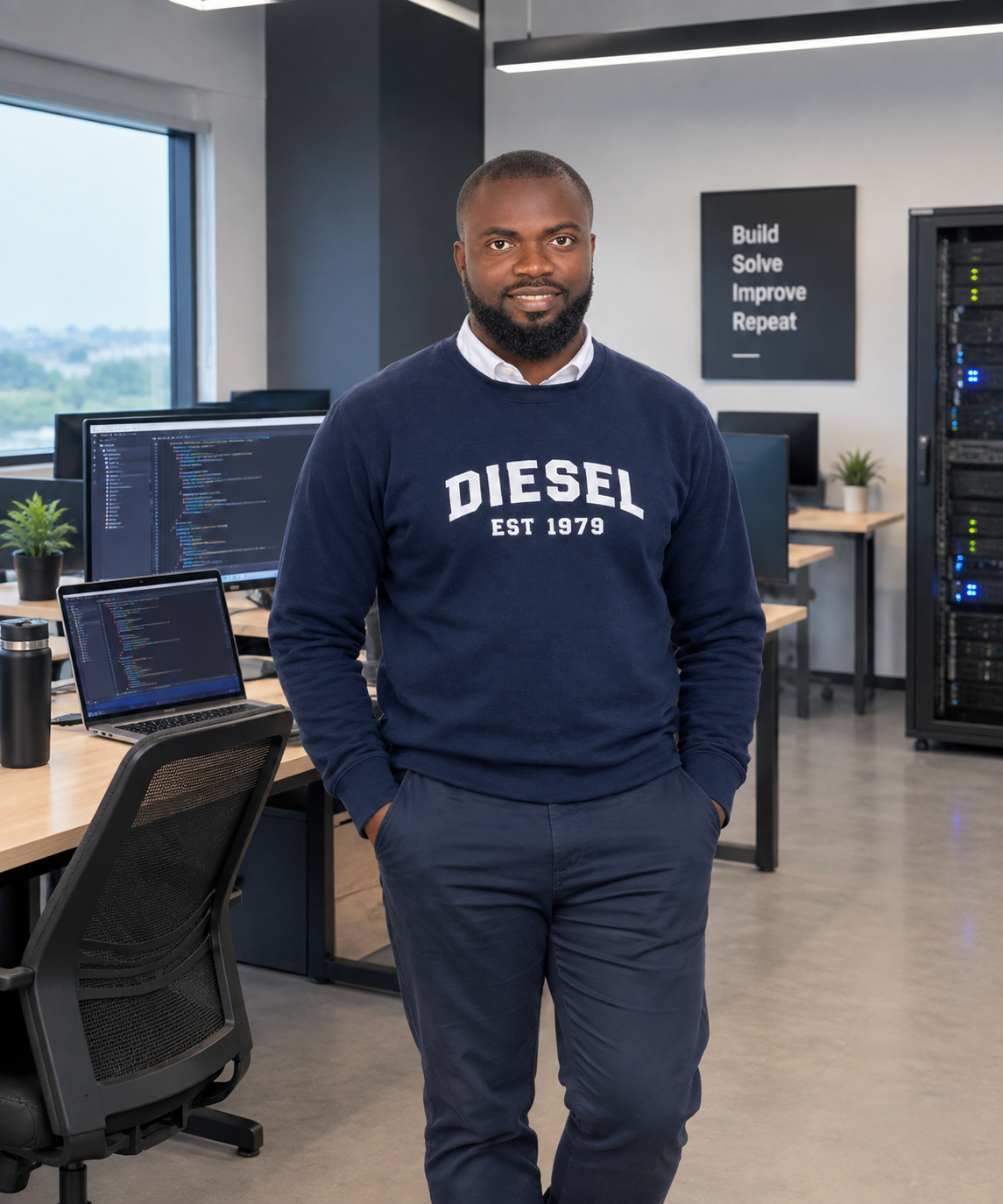
Systems Architect & Applied R&D Developer.
Saviour Ufuoma Amlasawole · Founder, VLTHR Lab
VLTHR Lab studies hard business and operations problems, builds working models and tools, and helps people make decisions they can trust, with proof behind every claim.
PRINCIPLEResearch first, build second.
The problem determines the approach; the evidence determines the claim.
0012026© VLTHRLAB
Swipe or scroll
The path
Plant floor to systems R&D.
The lab's way of working did not start in an office. It started on a plant floor, and grew from there.
2019 · 2020Field operations
Field Operator in petrochemical plant operations; industrial trainee experience in 2016 and 2017.
2020 · NOWIndependent consulting
Research, problem-solving and building systems for clients across industries.
ONGOINGWatching equipment
Spotting machine problems early, estimating how long parts will last, and advising what to do next.
ONGOINGMany industries
The same approach applied to finance, procurement, energy, transport, real estate and insurance.
TODAYVLTHR Lab
A research lab built on reusable methods, AI-assisted work, simulation and real software.
0022026© VLTHRLAB
What we investigate
Problems others treat as noise.
Everything connected
Plants, grids and supply chains where one change ripples through everything else.
Guessing with stakes
Pricing, risk, timing and investment calls that must be made without full information.
Scattered answers
Facts spread across documents, data and people's heads, brought into one clear picture.
Expensive mistakes
Choices where being wrong costs too much, checked twice before acting once.
Industries in flux
Markets and infrastructure mid-change: energy, transport, property, insurance.
No-playbook questions
Problems with no existing method, where the approach itself has to be designed first.
0032026© VLTHRLAB
Capabilities
What the lab can actually do.
Seven capabilities, each tied to a real artifact rather than a promise.
System design
Mapping the parts, connections and decision points of a system before any code. Framework layer
Practical research
Careful investigation where every claim is labeled by how much proof it has. Portfolio
Early warnings
Reading data over time to catch anomalies and test predictions against real baselines. Equipment Intelligence
Digital twins
Virtual copies of real systems for testing scenarios, without confusing a model for a measurement. Twin record
Building software
Turning a defined problem into working screens, workflows and tools. Trading Intelligence
AI-assisted work
AI tools speed up research and building, with a human checking every step. Agents directory
Reusable methods
Approaches built once and adapted across industries instead of starting from scratch. Index
0042026© VLTHRLAB
Watching machines
before they fail
Selected work · Equipment health
From a sensor reading to a clear next step.
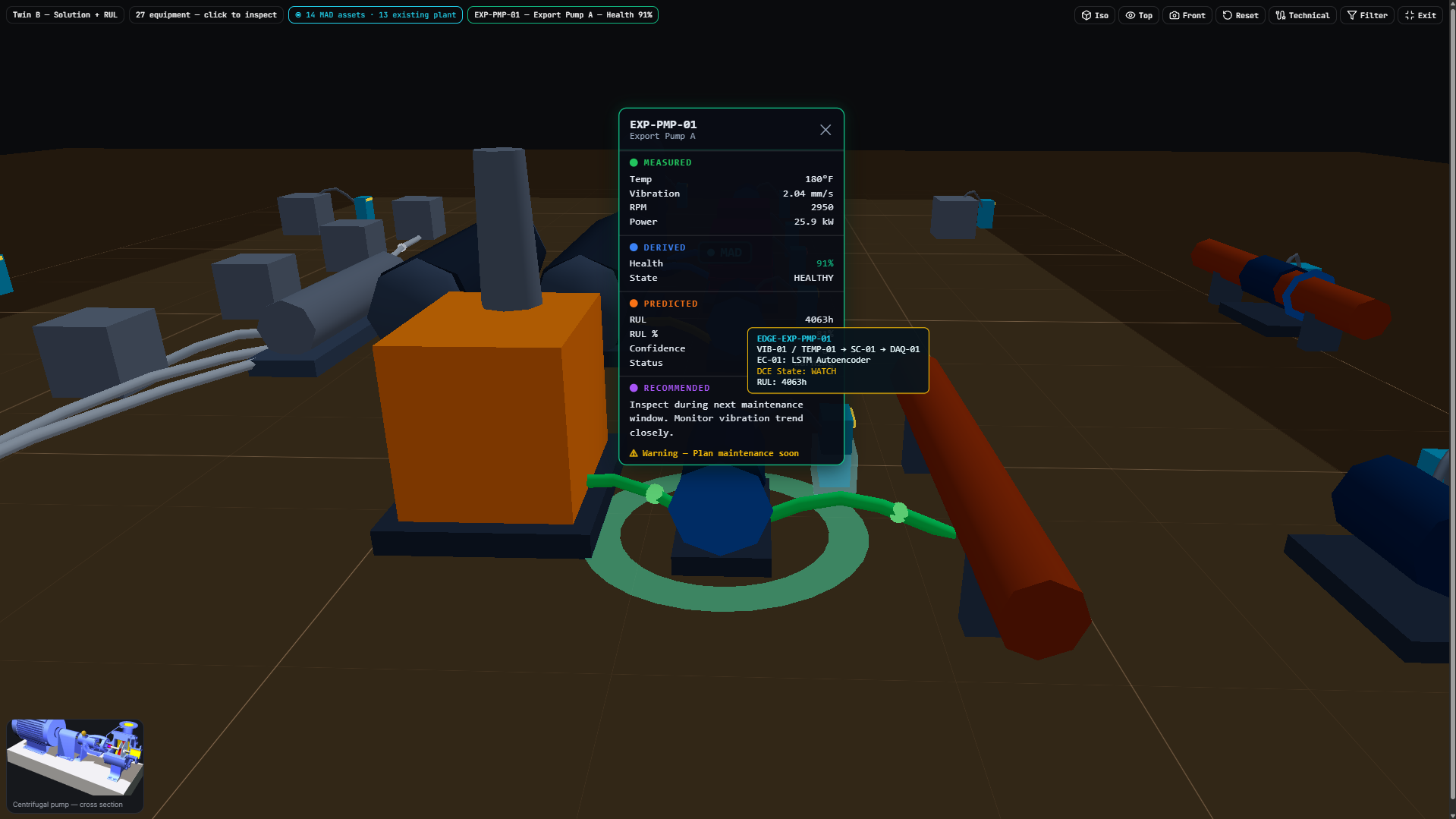
One screen keeps four things separate: what the sensors actually read, what that means for the machine's health, how long it may last, and what to do next.
SIMULATION3D plant twin
A working virtual plant you can click through. Everything on screen runs on simulated data, clearly marked. Full evidence record
UNAVAILABLELive-site proof
No real site is connected yet. That evidence does not exist, and we do not claim it.
PUBLIC DATATwin dataset v1
The first dataset from the flowstation twin is public.
Download the dataset
Free public download on Google Drive. No sign-in required.
0052026© VLTHRLAB
Selected work · Machine monitoring
A health screen that admits it's simulating.
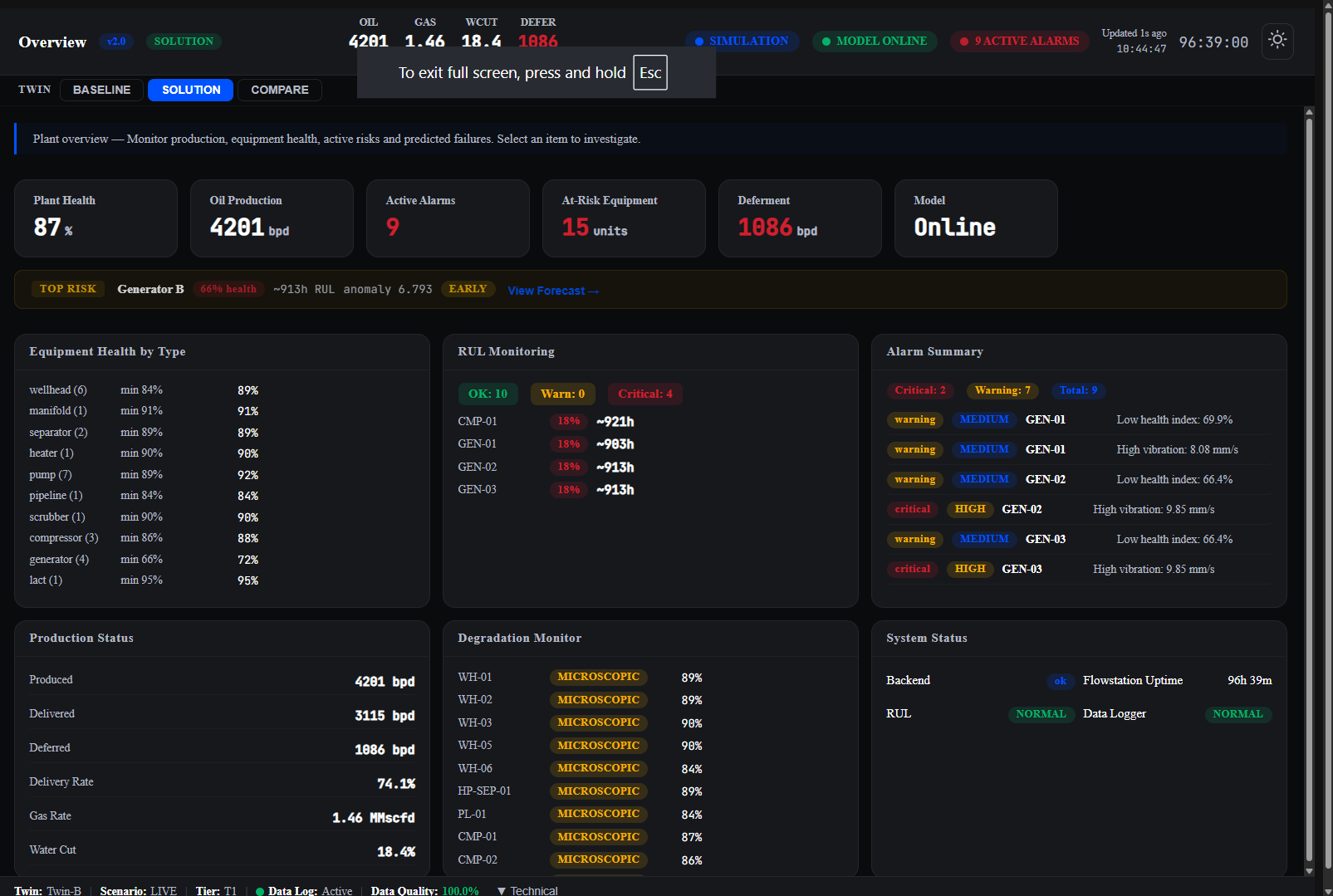
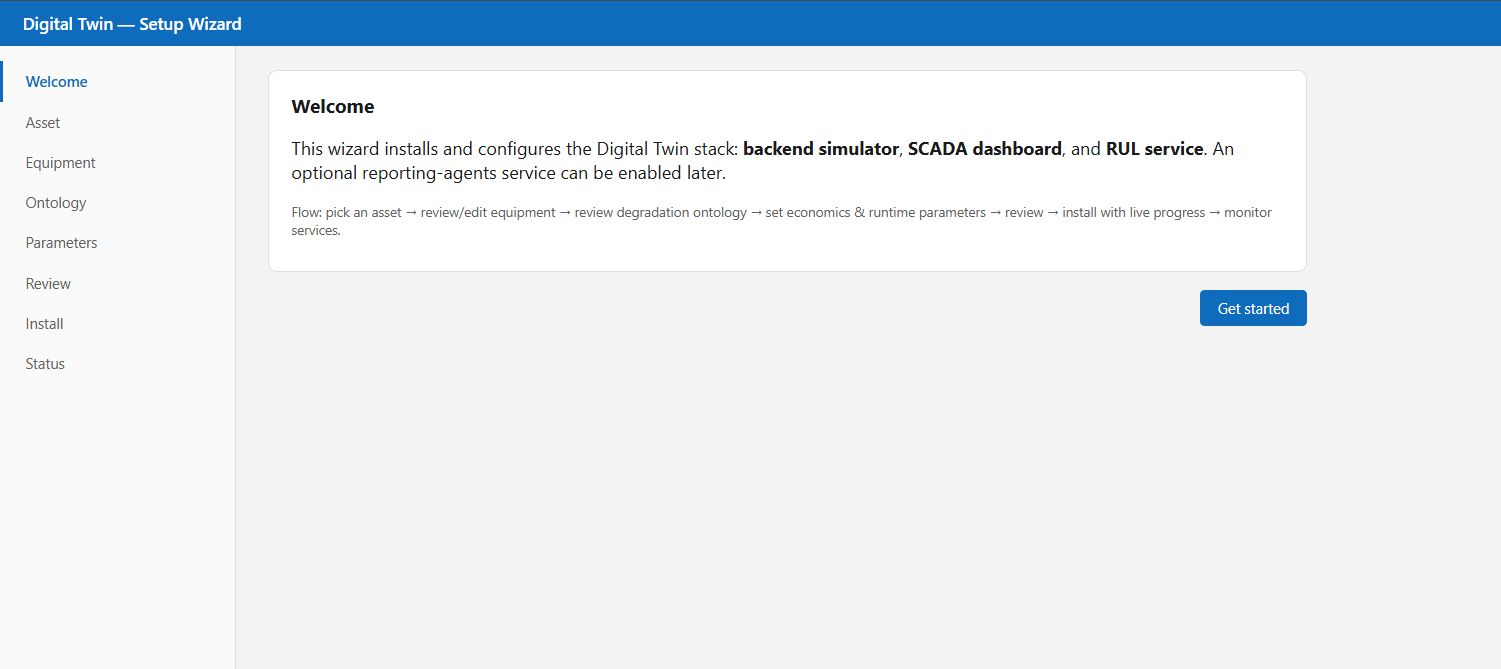
The plant overview is tagged SIMULATION, and its wear monitor says "early-stage" instead of crying fault. The same system installs through a step-by-step setup wizard.
LAB8 public datasets
The fault detector scored up to 0.9995 on public test data it had never seen. A lab result, not a field result. Full record
SIMULATIONWorking screens
The dashboard and installer run end to end against the built simulator.
UNAVAILABLEReal-site data
No live plant is connected. Real-world testing is still ahead, not behind us.
0062026© VLTHRLAB
Selected work · Trading tools
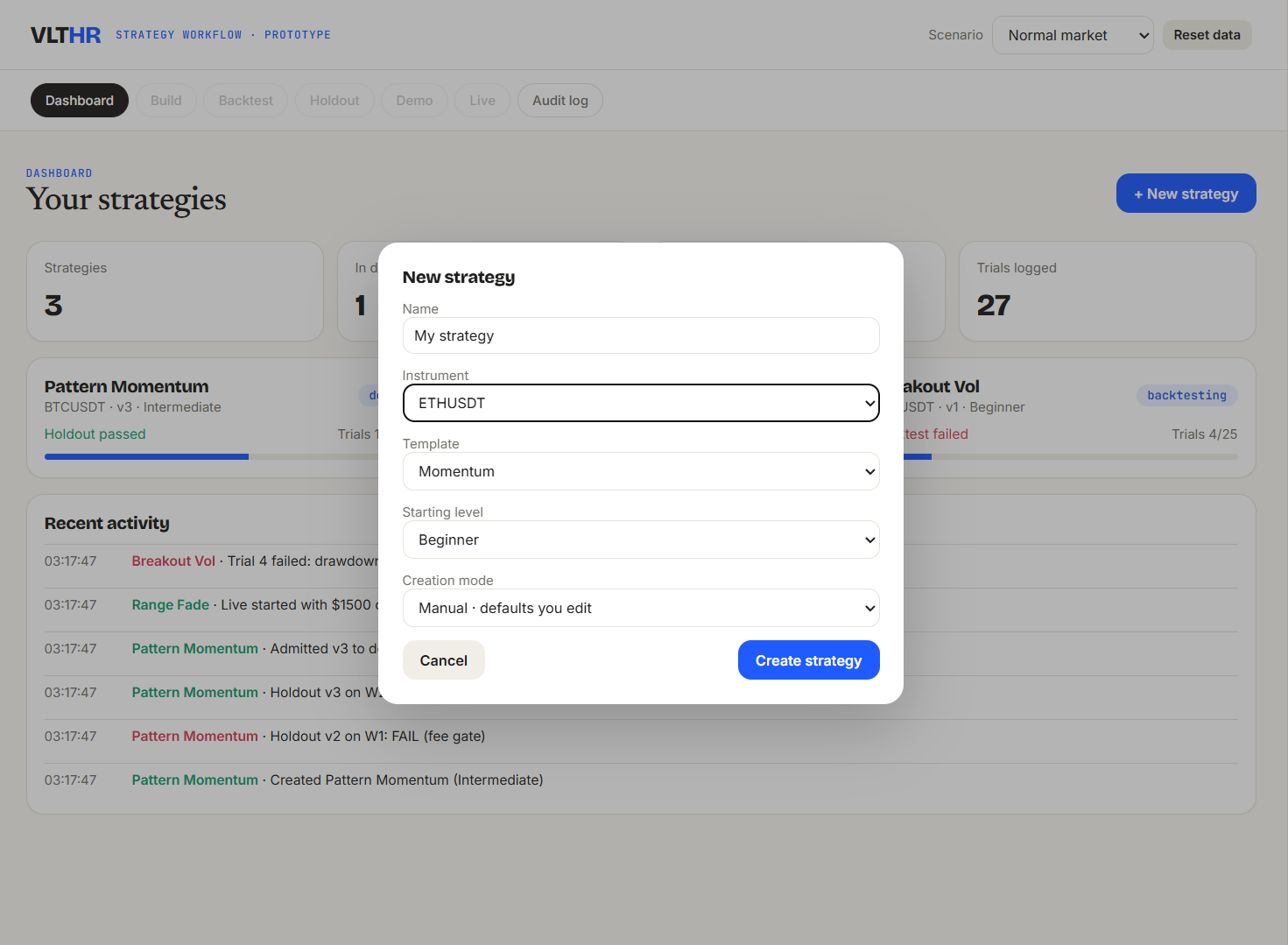
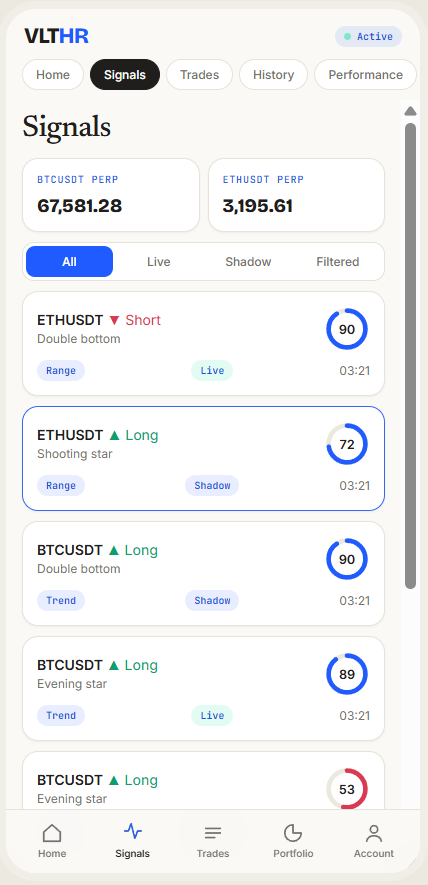
Every strategy is tested on unseen data first.
Each trading idea is trialled, scored and blocked from going live until it passes its tests. The signals screen shows which conditions each signal fits and how strong it is.
PROTOTYPEStrategy testing
A working tool that logs every trial and only promotes strategies that pass. Full evidence record
UNAVAILABLEProfit claims
No live trading results or profits are claimed anywhere on this page.
0072026© VLTHRLAB
Selected work · System control
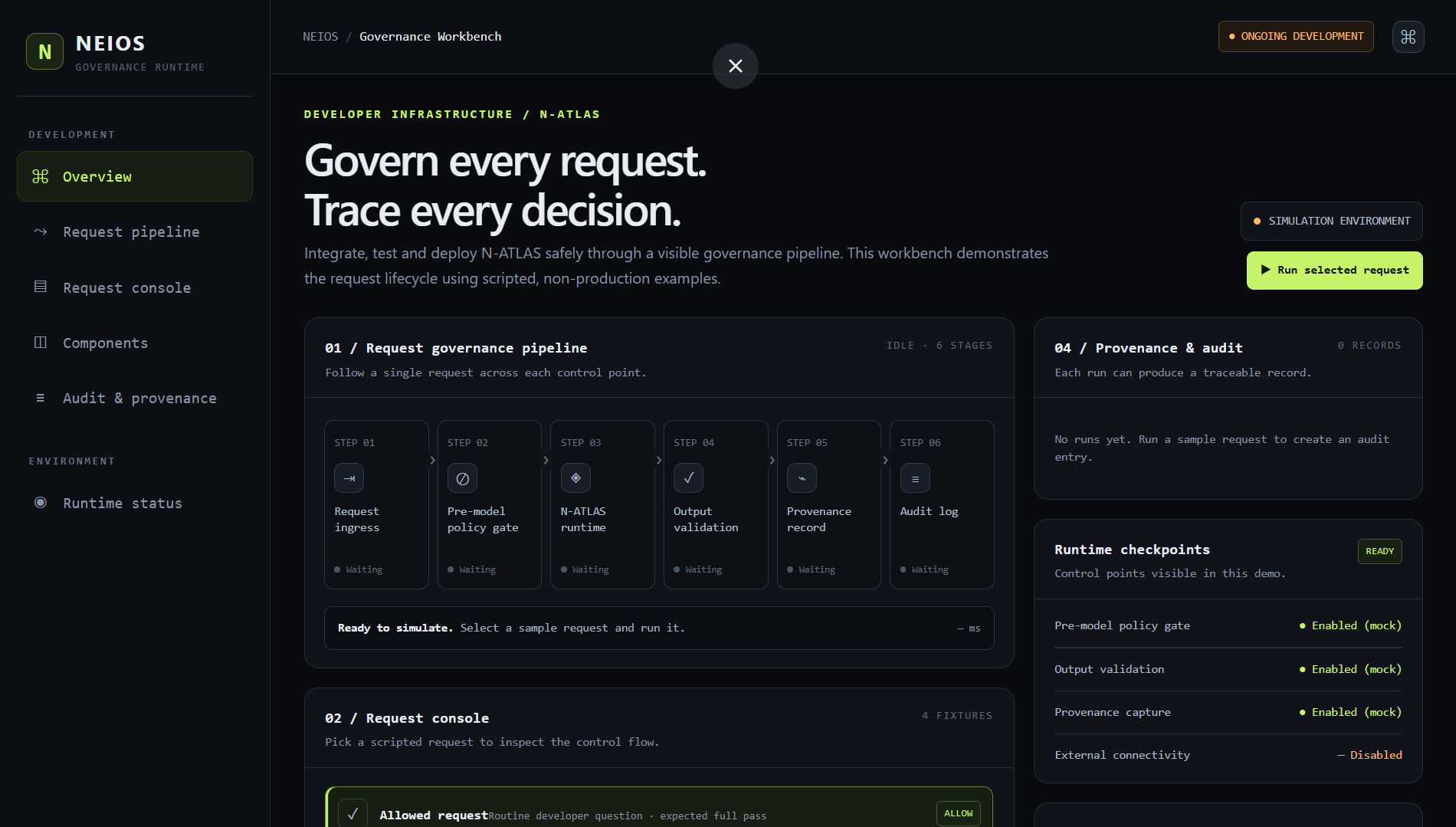
Every request checked. Every decision recorded.
NEIOS passes every request through six checkpoints and keeps an audit trail of what happened. The screen itself is honest about its limits: mock mode, zero records.
SIMULATIONControl panel
The checkpoint structure exists and runs. The panel itself says simulation environment, no runs yet. Still in development. Full record
0082026© VLTHRLAB
The same discipline,
outside industry
Selected work · Sound tools
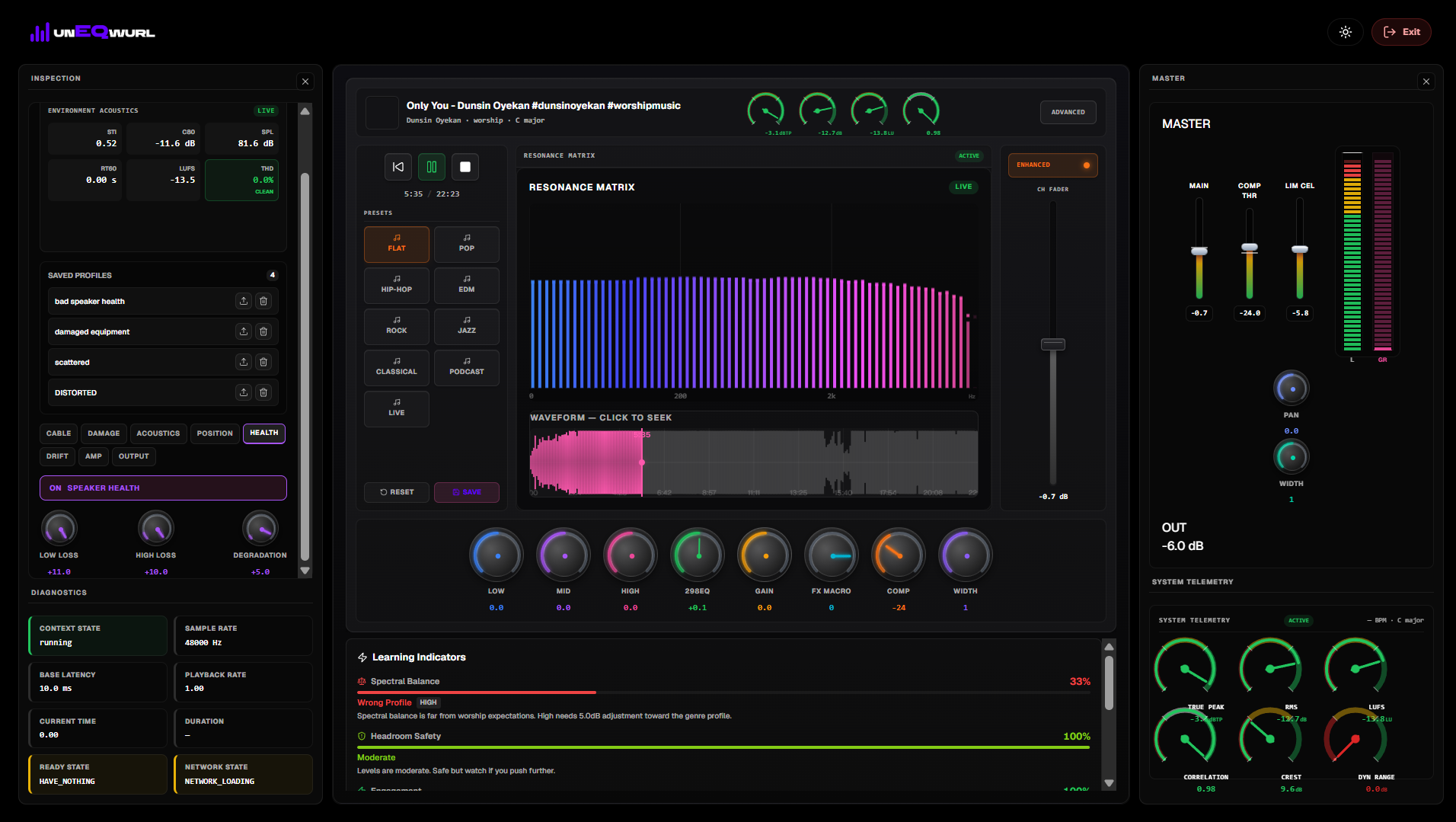
Audio analysis that works as you listen.
unEQwurl shows what is happening inside a sound while it plays: where it resonates, where it clips, and how it drifts. Each flagged issue carries its own severity score.
PROTOTYPELive audio tool
A working analysis screen with its own diagnostic logic, not just a display. Full evidence record
UNAVAILABLEFull breakdown
Which parts run fully live versus simulated has not been publicly itemized yet.
0092026© VLTHRLAB
Methods & other industries
One method, many industries.
Every program reuses the same building blocks: a clear label on how much proof exists, a path from measurements to recommendations, and a recorded trail of decisions.
METHODS7 reusable methods
PURFFAEKELCITMDQSROSMNIF
A name alone proves nothing, so each one shows its own grade. The inner workings stay private; what it does and how proven it is are public. Full index with grades
CONCEPT6 more programs
Deal, Insurance, Real Estate, Transport, Presentation and Power Grid projects follow the same rules, and are labeled as early-stage ideas. Portfolio
0102026© VLTHRLAB
How we work
The problem picks the method.
ProblemEvidenceModelExperimentValidationDecisionthen mark what stays uncertain
Proof before promises
If we cannot back it, we do not say it. When something is wrong, we trace it to the exact step that caused it.
The process is the point
Experience alone is not the product. A fast answer and a checked answer are not the same thing.
The work shapes the setup
How a project runs comes from what the problem actually needs. No forced templates.
Results you can check
What matters is not the answer but the change: where things started, what was done, and what measurably happened.
0112026© VLTHRLAB
Academic · industrial
· business engagements
Work with the lab
Bring a problem worth measuring.
Watching industrial equipment before it fails, virtual copies of real operations, tools that help with money and business decisions, and research projects that need the same standard of proof. Work can start anywhere from an early question to a working prototype.
0122026© VLTHRLAB